D.W. Griffith wrote and directed the one reel film "Confidence" for the Biograph Film Company during 1909. Photographed by G.W. Bitzer and Authur Marvin, the filmfeatures Florence Lawrence along with D.W. Griffith's wife, Linda Arvidson, and Kate Bruce.
SILENT film
D.W. Griffith
Biograph Film Company

Scott Lord on the Silent Film of Greta Garbo, Mauritz Stiller, Victor Sjostrom as Victor Seastrom, John Brunius, Gustaf Molander - the Golden Age of Swedish Silent Film........Lost Films in Found Magazines: Victor Seastrom directing John Gilbert and Lon Chaney, the printed word offering clues to deteriorated celluloid, extratextual discourse illustrating how novels were adapted to the screen; the photoplay as a literature, a social phenomenon; how it was reviewed, audience reception.
Scott Lord on Silent Film

In a way, the girl coming down the stairs is symbolic of the lost film itself, the unattainable She, idealized beauty antiquated (albeit it being the beginning of Modernism), with the film detective catching a glimpse of the extratextural discourse of periodicals and publicity stills concerning Lost Films, Found Magazines
Friday, May 30, 2025
Scott Lord Silent Film: Confidence (D.W. Griffith, 1909)
 Scott Lord on Silent Film, Scott Lord on Swedish Silent Film, Scott Lord on Danish Silent Film
Scott Lord Silent Film: Mary Pickford in The Old Actor (D.W.Griffith, Biograph 1912)
"The Old Actor" (two reels) was directed by D.W. Griffith for the Biograph Film Company during 1912and was photographed by G.W. Bitzer with a scenario by George Hennessy. The film stars Mary Pickford with Kate Bruce.
Silent Film
Silent Film
Scott Lord on Silent Film, Scott Lord on Swedish Silent Film, Scott Lord on Danish Silent Film
Thursday, May 29, 2025
Scott Lord Silent Film: Mary Pickford in The Unchanging Sea (Griffith, 1...
D.W. Griffith directed his wife, Linda Arvidson, and actress Mary Pickford in "The Unchanging Sea" (one reel) for the Biograph Film Companyduring 1910. The film was adapted from a poem by Charles Kingsley and photographed by G.W. Bitzer.
Silent Film
D.W. Griffith
Biograph Film Company
Scott Lord on Silent Film, Scott Lord on Swedish Silent Film, Scott Lord on Danish Silent Film
Monday, May 26, 2025
Bodakingen, The Tyrrany of Hate (Gustaf Molander, 1920)
“The King Boda” (“Tyranny of Hate/Boda kungen”, 1920) was the first film to bear the name of Gustaf Molander as director, Molander having also scripted the photoplay. It was also the first film to be photographed by Adrian Bjurman. The film stars Egil Edie. Both Wanda Rothgardt and her mother, Edla Rothgardt appear in the film, as do acresses Winifred Westover, Hilda Castgren, and interestingly enough, actress Vera Schmiterlow, friend of Greta Garbo from when they were at Dramaten, Stockholm together. Produced by Scandinavisk Filmcentral, the film can well be placed within the Golden Age of Swedish Silent Film.
Also appearing in the film "Bodakungen" was Franz Envall, Greta Garbo mentioned in a 1928 Photoplay magazine interview with Ruth Biery, "Then I met an actor...It was Franz Envall. He is dead now, but has a daughter in stage in Sweden. He asked me if they would let me try to get into the Dramatic School of the Dramatic School of the Royal Theater in Stockholm." Envall's daughter was in fact Signe Envall, who, after having appeared in "Gosta Berling's Saga" (Mauritz Stiller, 1924) and "The Kingdom of Rye" (Ivar Johnsson, 1929), was periodically featured in films from 1944 to 1968. Author Forsyth Hardy credits Gustaf Molander with having introduced actress Greta Garbo to director Mauritz Stiller.
1922 had been the year during which appeared the second film directed by Gustaf Molander, "Amatorfilmen", the first film in which actresses Elsa Ebben-Thorblad and Anna Wallin were each to appear, brought Mimi Pollack to Swedish Film audiences. Written by Bjorn Hodell and photographed by Bjorn Hodell, the film is presumed to be lost, with no surviving copies or fragments. Gustaf Molander
Gustaf Molander would breifly remain in the shadow of Victor Sjostromand Mauritz Stiller again with photographer Adrian Bjurman, during 1922 by directing actress Vera Schmiterlow, who had first appeared on screen in a brief part in Molander's film "Tyranny of Hate", in the film Thomas Graal's Ward (Thomas Graal's myndling), the third in a series of comedies begun by Mauritz Stiller. To modern American audiences and readers of extratextural discourse Schmiterlow may be more famous for being mentioned in biographies as a friend of Greta Garbo than for Molander having given her her first appearance as star of the film.
Scandinavian Silent Film
Swedish Silent Film Gustaf Molander
Scott Lord on Silent Film, Scott Lord on Swedish Silent Film, Scott Lord on Danish Silent Film
Sunday, May 25, 2025
Scott Lord Scandinavian Silent Film: Masterkatten i Stovlar (John Bruniu...
Author Forsyth Hardy, in his volume Scandinavian film explains that the film "Puss and Boots" was for Swedish Silent Film director John Brunius an early, debut attempt at filmaking and that he quickly established himself among his contemporary directors of the Golden Age of Swedish Silent Film by directing historical dramas.
The beautiful Mary Johnson stars with Gosta Ekman in the film, the director John Brunius also appearing in the film onscreen with son Palle Brunius. The cinematography was done by photographers Gustav A. Gustafson and Carl Gustav Florin.
"Puss and Boots" featured the first on screen appearance of actress Anna Carlsten. Silent Film John Brunius John Brunius
The beautiful Mary Johnson stars with Gosta Ekman in the film, the director John Brunius also appearing in the film onscreen with son Palle Brunius. The cinematography was done by photographers Gustav A. Gustafson and Carl Gustav Florin.
"Puss and Boots" featured the first on screen appearance of actress Anna Carlsten. Silent Film John Brunius John Brunius
Scott Lord on Silent Film, Scott Lord on Swedish Silent Film, Scott Lord on Danish Silent Film
Scott Lord Silent Film: Corner in Wheat (D.W. Griffith, Biograph, 1909)
"The Miller's Daughter", "The Song of the Shirt"(1908) and "A Corner of Wheat", directed by D.W. Griffith for the Biograph Film Company are early films that depicted the individual within a social context. Kay Sloan, in her copyrighted paper "Silent Cinema as Social Criticism, Front Page Movies", writes, "The comedies, melodramas and occaisional westerns about labor conflict, tenement poverty or political corruption reveal through fantasy an America torn with ideological conflict." Pointing out that film companies looked to the contemporay "muckrackers" for story lines, she includes the films "The Suffragete's Revenge" and "The Reform Candidate" as being timely depictions of audience involved in reception, extending that audience to the readers of Upton Sinclair, but later attributes the decline of social drama to the development of the feature film after World War I. She adds to these the film "The Govenor's Boss" which took its storyline from Tammany Hall while modernizing its theme and message, a technique often attempted by D.W. Griffith. Studio advertisements for "A Corner in Wheat" hailed "The Story of Wheat in Symbolism", writing, "This is possibly the most stirring and artistic subject ever produced by Biograph. It starts with an animated portrayal of Millet's masterpiece 'The Sowers'." "A Corner of Wheat" had been adapted by D.W. Griffith and Frank Woods from the novel "The Pit" and the short story "A Deal in Wheat", both written in 1903 by the sometimes controversial author Frank Norris.
The steady, weekly competition from other studios during 1909 was typical for the release of the Biograph film "In a Corner of Wheat"; from Selig there was "Pine Ridge Fued", from Lubin there was "Romance of the Rocky Coast", from Essany there was "The Heart of a Cowboy", from Vitagraph there was "Two Christmas-Tides" and from Edison Films there was "Fishing Industry in Gloucester, Mass.". The following week Biograph released "A Trap for Santa Claus" while Vitagraph vied for its audience with "A Midsummer Night's Dream" and Selig with "A Modern Dr. Jeckyll". As the competition was weekly, the month before Kalem had released "Dora", a dramatization of the poem by Alfred, Lord Tennyson and Vitagraph had offered "Lancelot and Elaine". Silent Film D.W. Griffith Biograph Film Company
The steady, weekly competition from other studios during 1909 was typical for the release of the Biograph film "In a Corner of Wheat"; from Selig there was "Pine Ridge Fued", from Lubin there was "Romance of the Rocky Coast", from Essany there was "The Heart of a Cowboy", from Vitagraph there was "Two Christmas-Tides" and from Edison Films there was "Fishing Industry in Gloucester, Mass.". The following week Biograph released "A Trap for Santa Claus" while Vitagraph vied for its audience with "A Midsummer Night's Dream" and Selig with "A Modern Dr. Jeckyll". As the competition was weekly, the month before Kalem had released "Dora", a dramatization of the poem by Alfred, Lord Tennyson and Vitagraph had offered "Lancelot and Elaine". Silent Film D.W. Griffith Biograph Film Company
Scott Lord on Silent Film, Scott Lord on Swedish Silent Film, Scott Lord on Danish Silent Film
Saturday, May 24, 2025
Scott Lord Silent Film: Battle of Elderbush Gulch (D.W. Griffith, 1913)
In addition to using closeups to isolate the actor from their diegetic surroundings and the particular background to the action of the scene, which, while viewing the emotion of the character as seperate in turn embeds, or immerses the character into the diegesis, locking and intertwining them into the word within the frame, D. W. Griffith would establish the relationship between character and environment as well through the use of editing and by varying spatial relationships, notably in the silent film "The Battle of Elderbush Gulch" (two reels) through the use of the longshot and the use of interiors.
The two reel film stars actresses Lillian Gish and Mae Marsh and was photographed by G.W. Bitzer for the Biograph Film Company.
Silent Film
Silent Film
Biograph Film Company
Scott Lord on Silent Film, Scott Lord on Swedish Silent Film, Scott Lord on Danish Silent Film
Scott Lord Silent Film: The Female of the Species (D.W. Griffith, Biogra...
Actress Mary Pickford appears with Dorothy Bernard and Charles West in "The Female of the Species", directed by D.W. Griffith and photographed by G.W. Bitzer for the Biograph Film Company in 1912.
Silent Film
Silent Film
Scott Lord on Silent Film, Scott Lord on Swedish Silent Film, Scott Lord on Danish Silent Film
Scott Lord Silent Film: Mary Pickford in What The Daisy Said (D.W. Griff...
During 1910 D.W. Griffith directed actress Mary Pickford in the short film "What The Daisy Said", photographed by G.W. Bitzer for the Biograph Film Company. Peter Cowie, in his volume Eighty Years of Cinema, gives the 1910 film "Simple Charity", directed by Griffith, as one of the earliest on screen appearances made by Mary Pickford.
Silent Film
Biograph
Scott Lord on Silent Film, Scott Lord on Swedish Silent Film, Scott Lord on Danish Silent Film
Scott Lord Silent Film: Biograph Film Company; The Lure of the Gown (D.W...
Actresses Marion Leonard and Florence Lawrence appeared with Linda Arvidson in "The Lure of the Gown", directed by D.W. Griffith and photographed by G.W. Bitzer for the Biograph Film Company in 1909. Silent Film D.W. Griffith D.W. Griffith
Scott Lord on Silent Film, Scott Lord on Swedish Silent Film, Scott Lord on Danish Silent Film
Scott Lord Silent Film: The New York Hat (D.W. Griffith, Biograph)
Directed by D. W. Griffith for the Biograph Film Company the film features the first photoplay written by Anita Loos. Subsequently, Loos was to write the scenarios and screenplays to films which starred Douglas Fairbanks. The New Movie Magazine during 1930 nostalgically related that the film had also introduced Lionel Barrymore to the screen and that Loos, who had only been sixteen years old at the time of its release, had received “the large sum of $15” for writing the film. Author Iris Barry explains that it was not only Anita Loos that was behind the scenes, “At this period, ideas for films were commonly bought from outsiders and members of the company alike. Mary Pickford, Mack Sennett and others contributed many of the plots Griffith used.” This in part can be taken into consideration when apply Autuer theory to the abrupt difference between the scriptwriting methods of D.W Griffith and Thomas Ince and when reconsidering autuer theory when comparing the directorial efforts of D.W. Griffith and Ingmar Bergman in the mileau of a theatrical acting company.
In the volume D.W. Griffith, American Filmaker, Iris Barry writes that 1912 was a year that D.W. Griffith was an innovator not only in the depiction of social themes and social problems but also in film technique and the uses of the camera as well as the legnthening of the onscreen running time of the two reeler. Barry describes the filmmaking involved in “The New York Hat” (one reel),The film uses cut-backs, close-shots and sharply edited scenes with ease and mastery: close-ups made acting a matter of expresssion and minute guestures instead of the stereotyped guestures of the popular theater.” Peter Cowie, in his volume Eighty Years of Cinema, writes, "Close ups already predominate this film."
In the short scenes of Griffith’s film, Mary Pickford is shown to the right of the screen in medium close shot, trying on a hat, her hands and elbows shown in the frame. Griffith cuts on the action of her leaving the frame to exterior shots. In a later scene, Griffith positions her to the left of the screen, and, his already having shown time having elapsed between the two scenes, then brings the action back to the right of the screen frame. As an early reversal of screen direction, or screen positioning, there is the use of screen editing in between the complimentary positions of showing her in the same interior. During the film the actress is, almost referentially, often kept in profile, facing to the right of the screen's frame. Although Griffith may have been still developing editing techniques, it has been noted that the acting style in the film can be seen as an example of a more naturalistic and less histrionic acting style than that of other contemporary films.
Silent Film D.W. Griffith Biograph Film Company
In the volume D.W. Griffith, American Filmaker, Iris Barry writes that 1912 was a year that D.W. Griffith was an innovator not only in the depiction of social themes and social problems but also in film technique and the uses of the camera as well as the legnthening of the onscreen running time of the two reeler. Barry describes the filmmaking involved in “The New York Hat” (one reel),The film uses cut-backs, close-shots and sharply edited scenes with ease and mastery: close-ups made acting a matter of expresssion and minute guestures instead of the stereotyped guestures of the popular theater.” Peter Cowie, in his volume Eighty Years of Cinema, writes, "Close ups already predominate this film."
In the short scenes of Griffith’s film, Mary Pickford is shown to the right of the screen in medium close shot, trying on a hat, her hands and elbows shown in the frame. Griffith cuts on the action of her leaving the frame to exterior shots. In a later scene, Griffith positions her to the left of the screen, and, his already having shown time having elapsed between the two scenes, then brings the action back to the right of the screen frame. As an early reversal of screen direction, or screen positioning, there is the use of screen editing in between the complimentary positions of showing her in the same interior. During the film the actress is, almost referentially, often kept in profile, facing to the right of the screen's frame. Although Griffith may have been still developing editing techniques, it has been noted that the acting style in the film can be seen as an example of a more naturalistic and less histrionic acting style than that of other contemporary films.
Silent Film D.W. Griffith Biograph Film Company
Scott Lord on Silent Film, Scott Lord on Swedish Silent Film, Scott Lord on Danish Silent Film
Scott Lord Silent Film: The Cardinal’s Conspiracy (D.W. Griffith, 1909)
Notably, Mary Pickford and James Kirkwood, who would later become her director, appear under the direction of D. W. Griffith in the one reeler "The Cardinal's Conspiracy", along with Mack Sennet as well as Griffith's wife Linda Ardvidson and actress Kate Bruce. The film was photographed by G.W. Bitzer for the Biograph Film Company.
The periodical Moving Picture World reviewed the film with an early description approaching genre theory. "The picture is of the costume kind. In other words, one, when looking at it, has gone to the pages of Stanely Weyman, Henry Harland or Morris Hewitt for his inspiration. We breathe the atmosphere of court life and are taken back, as it were, into a far more romantic period than the present." The periodical continued by regretting that they had viewed the film in "cold monochrome" rather than a more vibrant spectrum of pageant. Biograph Films had advertised the film in the previous issue of Moving Picture World, sharing the full page with Selig, Independent and Kalem studios. Paired with the film "Friend of the Family", Biograph proclaimed that in the film "The Cardinal's Conspiracy", "The subject is elaborately staged, comprising some of the most beautiful exterior scenes ever shown."In her autobiography When The Movies Were Young, Griffith's wife Linda Arvidson sees the film as the first important screen characterization for actor Frank Powell, adding him to the "remarkable trio" at Biograph of actors Frank Powell, James Kirkwood and Henry B. Walthall. Tom Gunning points to the film belonging to a period when a cinema of narrative integration in fact centered on characterization and accordingly developed film technique with that in mind. To accomadate that narrative integration and its movement to a versimilar acting rather than the florid, histrionic gestures of a filmed theater, Griffith would bring the camera into the story. Gunning writes, "Pickford surpasses any other Biograph actress in the mastery of the new versimilar style...Pickford generally employs a slower pace and her guestures appear intended to reveal psychological traits through behavior."
Silent Film Silent Film
Scott Lord on Silent Film, Scott Lord on Swedish Silent Film, Scott Lord on Danish Silent Film
The Photoplay: Swedish Silent Movie Posters


Swedish Silent Film

Swedish Silent Film
Scott Lord on Silent Film, Scott Lord on Swedish Silent Film, Scott Lord on Danish Silent Film
Scott Lord Silent Film: Musgrave Ritual (George Treville, 1912)
Scott Lord on Silent Film, Scott Lord on Swedish Silent Film, Scott Lord on Danish Silent Film
Scott Lord Silent Film: The Copper Beeches (Calliard, 1912)
"THe Copper Beeches" in which actor Georges Trevilles starred as rhe detective Sherlock Holmes, was directed by Adrian Calliard during 1912.
Silent Film Silent Film Sherlock Holmes
Silent Film Silent Film Sherlock Holmes
Scott Lord on Silent Film, Scott Lord on Swedish Silent Film, Scott Lord on Danish Silent Film
Sunday, May 18, 2025
The Photoplay: Silent Film Lobby Card, Greta Garbo


 Scott Lord on Silent Film, Scott Lord on Swedish Silent Film, Scott Lord on Danish Silent Film
Greta Garbo photographed by Ruth Harriet Loiuse


Not incidentally, to show the amount of exposure in the printed media that Greta Garbo the recluse did recieve, during 1931 an new fan magazine entitled Movie Mirror launched its first issue, Volume One, Number One. A photocaption read, "The first picture in a new magazine--it must be Greta Garbo.

Greta Garbo

Greta Garbo
Greta Garbo
Greta Garbo
Greta Garbo
Greta Garbo
Greta Garbo
Scott Lord on Silent Film, Scott Lord on Swedish Silent Film, Scott Lord on Danish Silent Film
Saturday, May 17, 2025
Swedish Silent Film: Karin Swanstrom
Author Anne-Kristin Wallgren, on Nordic Academic Press, notes that the films of Karin Swanstrom may have seemed atypical with the Swedish Silent Film of Sweden's Golden Age. In Welcome Home, Mr Swanson- Swedish Emigrants and Swedishness on Film, she writes, "Of the few Twneties films to mention America, only one has a happy ending, namely, Boman pa utsallningen (Boman at the Exhibition/Boman at the Fair, Karin Swanstrom, 1923, Ironically, Forsyth Hardy, in the volume Scandinavian Film notes, "Svensk Filmindustri, through its producers Karin Swanstrom and Sickan Claesson, was content to produce modestly conceived films for the home front. They were for the most part comedies with a strong theatrical flavor, or farces."
Hjalmar Bergman scripte two photoplays for director Karin Swanstrom during 1925, "Kalle Utter", in which the director also appeared an actress in front of the camera, her costarring with actress Edit Rolf and the film "The Flying Dutchman" (Flygande Hollandaren) in which actress Edit Rolf appeared with Margareta Wendel. The film "Flygande Hollandaren" is presumed to be lost, with no surviving copies known to exist.
Greta Garbo
Silent Film
Swedish Silent Film
Hjalmar Bergman scripte two photoplays for director Karin Swanstrom during 1925, "Kalle Utter", in which the director also appeared an actress in front of the camera, her costarring with actress Edit Rolf and the film "The Flying Dutchman" (Flygande Hollandaren) in which actress Edit Rolf appeared with Margareta Wendel. The film "Flygande Hollandaren" is presumed to be lost, with no surviving copies known to exist.
Greta Garbo
Silent Film
Swedish Silent Film
Scott Lord on Silent Film, Scott Lord on Swedish Silent Film, Scott Lord on Danish Silent Film
Tuesday, May 13, 2025
The Photoplay: Silent Film Lobby Cards
Silent Film


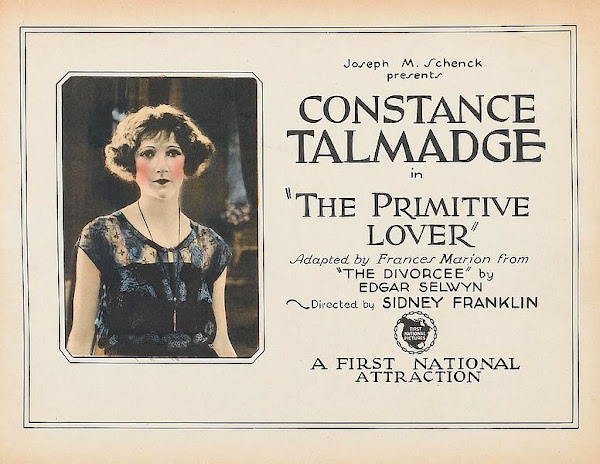


Constance Talmadge Silent Film
Scott Lord on Silent Film, Scott Lord on Swedish Silent Film, Scott Lord on Danish Silent Film
The Photoplay: Silent Movie Lobby Cards, Lon Chaney


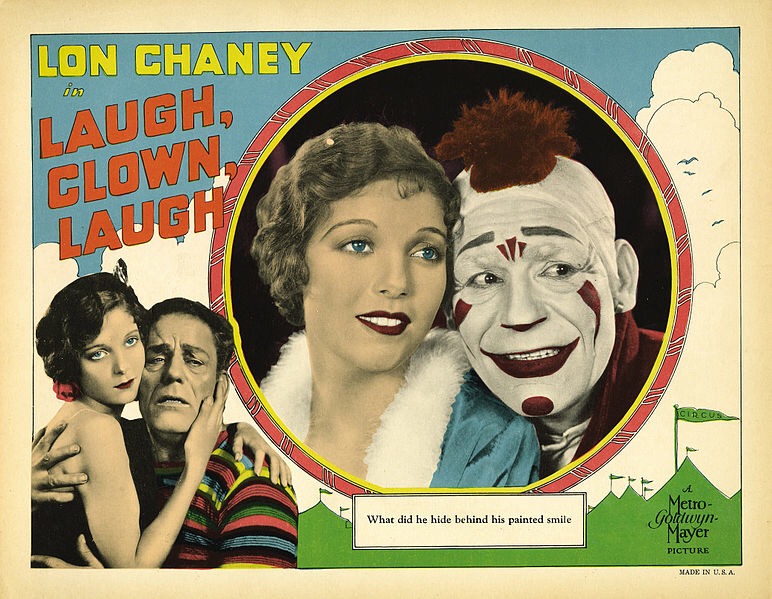
 Scott Lord on Silent Film, Scott Lord on Swedish Silent Film, Scott Lord on Danish Silent Film
Swedish Sound Film Movie Posters
 Scott Lord on Silent Film, Scott Lord on Swedish Silent Film, Scott Lord on Danish Silent Film
Thursday, May 8, 2025
Scott Lord Swedish Silent Film: Calles New Clothes (Calles Nya Klader, G...
During 1916, George af Klercker wrote and directed the films "Calle's New Clothes" (Calles Nya Klader), starring Mary Johnson and Teckla Sjoblom, and "Calle as a Millionaire" (Calle som Miljonar), starring Maja Cassel and actress Helge Kihlberg in the first film in which she was to appear.Both films were photographed by Gustaf A. Gustafsson and Carl Gustaf Florin. Silent Film Swedish Silent Film Georg af Klercker
Scott Lord on Silent Film, Scott Lord on Swedish Silent Film, Scott Lord on Danish Silent Film
Wednesday, May 7, 2025
Scott Lord Silent Film: Pearl White in The Perils of Pauline, The Shatter...
Silent Film
The Swedish censorship of 1911 prevented "The Perils of Pauline from becoming familiar to audieneces in Sweden. Marina Dahlquist, in her article "The Best Known Woman in the World" writes that the cliffhanger "constituted precisely the type of films that the Swedish national censorship body was ser up to weed out from the market, aside from sexually tinged Danish melodrama." Dahlquist adds that there had also been a lack of publicity for the film, a lack of dvertising, or "newspaper-magazine tie ins".
Silent Film
Perils of Pauline, Silent Cliffhanger
The Swedish censorship of 1911 prevented "The Perils of Pauline from becoming familiar to audieneces in Sweden. Marina Dahlquist, in her article "The Best Known Woman in the World" writes that the cliffhanger "constituted precisely the type of films that the Swedish national censorship body was ser up to weed out from the market, aside from sexually tinged Danish melodrama." Dahlquist adds that there had also been a lack of publicity for the film, a lack of dvertising, or "newspaper-magazine tie ins".
Silent Film
Perils of Pauline, Silent Cliffhanger
Scott Lord on Silent Film, Scott Lord on Swedish Silent Film, Scott Lord on Danish Silent Film
Scott Lord Silent Film: Pearl White in The Perils of Pauline, The Tragic...
Scott Lord on Silent Film, Scott Lord on Swedish Silent Film, Scott Lord on Danish Silent Film
Scott Lord Silent Film: Pearl White in The Perils of Pauline, The Serpen...
Scott Lord on Silent Film, Scott Lord on Swedish Silent Film, Scott Lord on Danish Silent Film
Subscribe to:
Comments (Atom)