Mauritz Stiller directed "Karleck och Journalistick", a comedy based on the writing of Harriet Bloch, in 1916. The film stars Jenny Tschernichin-Larsson, Stina Berg, Gucken Cederberg and Karin Molander.
The most widely known films directed by Mauritz Stiller during 1916 were "The Ballet Primadonna" (Balletprimmadonnan), starring Lars Hanson, and Jenny Tschernichin-Larsson and "The Wings" (Vingarne), a film in which both photographer Julius Jaenzon and director Mauritz Stiller appear on screen, starring Lars Hanson and Lilli Bech.
The film "The Ballet Primmadonna" was phtographed by Julius Jaenzon and featured one of the only two photoplays written for Svenska Biografteatern by Djalmer Christophersen.
When "The Wings" was recently screened by curator Jon Wengstrom of the Swedish Institute, Mauritz Stiller was commended for his onscreen appearance by virtue of his adding a self-reflexive scene with the on the set filming of a film to the framing structure when adapting the original story written by Herman Bang. The film currently screened by Wengstrom at Silent Film Festivals is in fact a restoration of an incomplete print which includes the footage of Stiller and Jaenzon, which had been unpopular and neglected as a lost film sequence. Wengstrom writes, "The erotic drama, and the delightful play of ancient myth and urban modernity is framed by a prologue and epilogue where Stiller gets the idea to the manuscript, casts and shoots the film"
In outlining the initial differences between Victor Sjostrom and Mauritz Stiller, the former having a propensity toward serious, artistic film, the latter making more comedic satires, Aleksander Kwaitkowski, in his volume Swedish Film Classics looks at the technique used by Mauritz Stiller as the film "Love and Journalism" unfolds, "Stiller's narration is purely visual (only twenty five intertiles in the whole picture), streamlined, lucidly carrying the plot forward."
Although there have been films directed by Victor Sjostrom and Mauritz Stiller that have been rediscovered, restored and preserved during the twenty-first century, the 1916 film "The Fight For His Heart" (Kampen om hans hjarta) directed by Maurtiz Stiller and starring actresses Karen Molander and Anna Diedrich is a Lost Silent Film with no surviving copies or fragments. Also directed that year by Stiller and also lost is the Swedish Silent Film "The Lucky Brooch" (The Lucky Pin/Lyckonalen), photographed by Hugo Edlund and satrring Greta Almroth and Stina Berg.
In regard to Lost Film, Found Magazines according to Peter Cowie, author of the volume Scandinavian Cinema, the film "Love and Journalism" directed by Mauritz Stiller, taken with Stiller's film "The Wings", is one that has "miraculously survived", the bulk of the films made by Mauritz Stiller and Victor Sjostrom before 1916 now lost with no surviving copies existing.
Of "Love and Journalism" Peter Cowie, in his volume Swedish Cinema, writes, "Only about a half hour in legnth, it remains sparkling fresh and worldly-wise."
Harriet Bloch, who wrote the screenplay to Stiller's film "Love and Journalism" also during 1916 wrote the photoplay to the film "Old Age and Folly" (Alderdom och darskap) directed by Swedish Silent Film director Edmond Hansen, the cinematographer to the film Carl Gustaf Florin. Starring in the film, a lost silent film with no surviving copies, were Edith Erastoff and Greta Almroth. During the following year Harriet Bloch wrote the photoplay to "The Millionaire Inheritance" (Miljonarvet) directed by Konrad Tollroth and starring Jenny Tschernichin-Larsson, Greta Almroth, Stina Berg and Hedvig Nenzen. The film is also a lost silent film.
Norman J. Zierold, in his biography entitled Garbo, explains that some of the noteriety that Mauritz Stiller did have, complemented by his "dashing" public image of fur coats and jewlery, may have been well deserved. "In his major efforts, Stiller was an authentic innovator, not unlike D.W Griffith. He was the first European director to use closeups, to employ the shifting camera, to develop new and striking canera angles."
It may not be well known that during 1916 Mauritz Stiller was hoping to leave film production. John Fullerton, in his paper Intimate Theater and imaginary scenes: film exhibition in Sweden before 1920, chronicles that Mauritz Stiller had made four films during the first half of 1916 before going to Gothenburg to direct "Ett dromspel" by August Strindberg.
Mauritz Stiller and Victor Sjostrom
Silent Film

Scott Lord on the Silent Film of Greta Garbo, Mauritz Stiller, Victor Sjostrom as Victor Seastrom, John Brunius, Gustaf Molander - the Golden Age of Swedish Silent Film........Lost Films in Found Magazines: Victor Seastrom directing John Gilbert and Lon Chaney, the printed word offering clues to deteriorated celluloid, extratextual discourse illustrating how novels were adapted to the screen; the photoplay as a literature, a social phenomenon; how it was reviewed, audience reception.
Scott Lord on Silent Film

Gendered spectatorship notwithstanding, in a way, the girl coming down the stairs is symbolic of the lost film itself, the unattainable She, idealized beauty antiquated (albeit it being the beginning of Modernism), with the film detective catching a glimpse of the extratextural discourse of periodicals and publicity stills concerning Lost Films, Found Magazines
Showing posts with label Mauritz Stiller. Show all posts
Showing posts with label Mauritz Stiller. Show all posts
Tuesday, February 17, 2026
Swedish Silent Film: Love and Jornalism (Karleck Och Journalistik, Mauritz Stille...
 Scott Lord on Silent Film, Scott Lord on Swedish Silent Film, Scott Lord on Danish Silent Film
Saturday, September 6, 2025
Swedish Silent Film Stars on the Theater Stage
Maurtiz Stiller
During 1911, Mauritz Stiller acted on stage at the Lilla Teaten.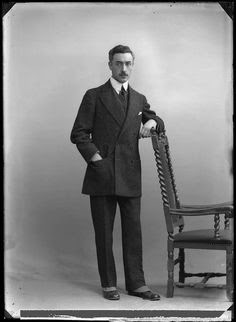

 Scott Lord on Silent Film, Scott Lord on Swedish Silent Film, Scott Lord on Danish Silent Film
Monday, October 14, 2024
Scott Lord Swedish Silent Film: Sangen om den eldroda blomman (Mauritz S...
"The Song of the Scarlet Flower" (Sangen och elroda blomman, 1919) was to star Lars Hanson, Greta Almroth, Lilebel Ibsen and Edith Erastoff. The film was directed by Mauritz Stiller with a photoplay written by Gustaf Molander. "Man's Way With Women" (Sangen och elroda Blommen, 1934) was to star Edvin Adolphson, Inga Tiblad, Aino Taube, Birgit Tengroth and Gull Maj-Nori . The film was directed by Per Axel Banner with the legendary photographer Julius Jaenzon with a script by the legendary photoplay dramatist Ragnar Hylten-Cavallius. "The Song of the Scarlet Flower" was with Gunnel Lindblom and Anita Bjork was directed by Gustaf Molander
The tinting of the first film provides contrast netween its individual scenes, moods and uses of nature as a background, its narrative creating a structure of seperate chapters.
Scholar Jaakko Seppalia attributes the rapid shooting of director Mauritz Stiller in "Song of the Scarlett Flower" as a direct influence on the film "The Logroller's Bride" (Koskenlaskijan marsian") directed by Finnish director Ekki Karu, particularly the use of several cameras and longshots during a rapid shooting sequence, both directors realizing that "heroic moments of action could be depicted in detail on film". Peter Cowie, in his volume Scandinavian Cinema, points out the "lyrical imagery of documentary realism" of the film while delineating the gap between the work of Mauritz Stiller and Victor Sjostrom as further narrowing into less of a contrast.
Mauritz Stiller
Scandinavian Silent Film
Scott Lord on Silent Film, Scott Lord on Swedish Silent Film, Scott Lord on Danish Silent Film
Subscribe to:
Posts (Atom)