The year 1912 was to mark the first film with Lillian and Dorothy Gish, “An Unseen Enemy” (one reel), directed by D.W. Griffith for the Biograph Film Company. Lillian and Dorothy Gish appeared in a dozen two reel films together during 1912 and several more during 1913. In The Man Who Invented Hollywood, the autobiography of D.W. Griffith, published in 1972, Griffith outlines his arriving at the Biograph Film Company and adding actors, including Mary Pickford,to his ensemble. Griffith recalls, "One day in the early summer of 1909, I was going through the dingy, old hall of the Biograph studio when suddenly the gloom seemed to disappear. The change was caused by the prescence of two young girls sitting side by side and on a hall bench...They were Lillian Gish and Dorothy Gish. Of the two, Lillian shone with an extremely fragile, ethereal beauty...As for Dorothy, she was lovely too, but in another manner- pert, saucy, the old mischief popping out of her." Actress Lillian Gish, in her autobiography, The Movies, Mr. Griffith and Me writes,"Mr. Griffith had rehearsed 'The Unseen Enemy' with other actresses, but after meeting us, he decided we would be suitable for the leads and changed the plot just enough to fit us."
The cinematographer to "An Unseen Enemy" was G.W. Bitzer.
Silent Film
Lillian and Dorothy Gish
Biograph Film Company
The Adventures of Dolly: D.W. Griffith for the Biograph Film Company

Scott Lord on the Silent Film of Greta Garbo, Mauritz Stiller, Victor Sjostrom as Victor Seastrom, John Brunius, Gustaf Molander - the Golden Age of Swedish Silent Film........Lost Films in Found Magazines: Victor Seastrom directing John Gilbert and Lon Chaney, the printed word offering clues to deteriorated celluloid, extratextual discourse illustrating how novels were adapted to the screen; the photoplay as a literature, a social phenomenon; how it was reviewed, audience reception.
Scott Lord on Silent Film

Gendered spectatorship notwithstanding, in a way, the girl coming down the stairs is symbolic of the lost film itself, the unattainable She, idealized beauty antiquated (albeit it being the beginning of Modernism), with the film detective catching a glimpse of the extratextural discourse of periodicals and publicity stills concerning Lost Films, Found Magazines
Showing posts with label Scott Lord. Show all posts
Showing posts with label Scott Lord. Show all posts
Monday, September 14, 2026
Scott Lord Silent Film: Lillian Gish in An Unseen Enemy (D.W. Griffith, Biograph 1912)
 Scott Lord on Silent Film, Scott Lord on Swedish Silent Film, Scott Lord on Danish Silent Film
Scott Lord Silent Film: The Lighthouse by the Sea (Porter, Edison, 1911)
Directed by Edwin S. Porter in 1911 for Edison Film Manufacturing Company, "Lighthouse by the Sea" was written by Bannister Merwin and starred actress Mabel Trunnelle. Silent Film Edison Studios
Scott Lord on Silent Film, Scott Lord on Swedish Silent Film, Scott Lord on Danish Silent Film
Saturday, September 12, 2026
Scott Lord Silent Film: Carol Dempster in The Love Flower (D.W. Griffith, 1920)


In their volume The Films of D. W. Griffith, Edward Wagenkneckt and Anthony Slide summarize the theme of "The Love Flower" as being "the paradox of reprehensible deeds committed by "the fair hand of woman' for the sake of love". Of the cinematography, Wagenkneckt and Slide write, "The lyrical element so characteristic of Griffith is fortunately much better expressed photographically than in the purple prose of some of the captions. The many shots of tropical vegetation are richly atmospheric and the rope bridge is a novel, interesting and slightly terrifying property." D.W. Griffith directed "The Love Flower" during 1920 from his own adaptation of a story by Ralph Stock, the cinematographers to the film having been G.W. Bitzer and PauH. Allen.
Writer Anthony Slide provides biographical entries on one hundread Silent Film stars without avoiding both ones that he met personally and more prominent choices in a section titled "Legends". About D. W. Griffith's star Carol Dempster, Slide writes "Carol Dempster's hysterical running around in 'The Love Flower' is nothing more than pure melodrama." Also starring in the film is actress Florence Short.
Director D.W. Griffith also filmed "The Idol Dancer" with actresses Clarine Seymore and Kate Bruce.
After having starred in the seven reel silent film “The Love Flower”, directed by D.W. Griffith in 1920, actress Carol Dempster went on to star in the 1921 film “Dream Street”, again directed by D. W. Griffith. Author Anthony Slide calls both films "impersonations" of Griffith's better leading ladies.
Silent Film D.W. Griffith
Scott Lord on Silent Film, Scott Lord on Swedish Silent Film, Scott Lord on Danish Silent Film
Monday, September 7, 2026
Scott Lord Silent Film: Knight of the Trail (Ince, 1915)
Frank Borzage stars with director William S. Hart and
actress Leona Hutten, in the two reeler "Knight of Trail". Borzage shortly thereafter went on to direct silent film for The Triangle Film Corporation and although copies of the 1918 film "The Gun Woman" still exist, the remaining seven films directed by Borazge during 1918, "Innocents Pogress", "The Shoes That Danced", "Society For Sale", "An Honest Man", "Who Is To Blame", "The Ghost Flower" and "The Atom" (five reels) are presumed to be lost silenr film, with no surviving copies existing, as are the remaining two silent films Frank Borzage directed for the Triangle Film Corporation during 1919, "Tonton the Apache" and "Prudence on Broadway" (five reels).
Kenneth MacGowan, in his volume Behind the Screen, explains, if not inadvertantly, genre as having the component of developing along with the audience's expecting a recognizable star exacting similar characterizations by seeing the Western as having belonged to the actors Broncho Billy Anderson, Tom Mix and W.S. Hart, Anderson having portrayed a cowboy in four hundred shorts, Mix having portrayed a cowboy in over sixty Fox features, accompanied by three of his horses to extend the genre's parameters. "At the peak of Mix's career, he was even more popular than Hart...His short films go back to 1910 with Selig, further than Hart's, but Hart's rise was swifter. Under Ince's skillful handling, Hart developed in 1915 from an actor in two reelers into one of Triangle's two most important stars."John L. Fell, in his volume A History of Film, chronicled, "The Westerns made for Ince by William S. Hart and others struck critics and foreign audiences, the French particularly, as remarkable for their attention to natural detaill, especially the spare backgrounds on which elemental dramas played."
Silent Film
Silent Western Film
Kenneth MacGowan, in his volume Behind the Screen, explains, if not inadvertantly, genre as having the component of developing along with the audience's expecting a recognizable star exacting similar characterizations by seeing the Western as having belonged to the actors Broncho Billy Anderson, Tom Mix and W.S. Hart, Anderson having portrayed a cowboy in four hundred shorts, Mix having portrayed a cowboy in over sixty Fox features, accompanied by three of his horses to extend the genre's parameters. "At the peak of Mix's career, he was even more popular than Hart...His short films go back to 1910 with Selig, further than Hart's, but Hart's rise was swifter. Under Ince's skillful handling, Hart developed in 1915 from an actor in two reelers into one of Triangle's two most important stars."John L. Fell, in his volume A History of Film, chronicled, "The Westerns made for Ince by William S. Hart and others struck critics and foreign audiences, the French particularly, as remarkable for their attention to natural detaill, especially the spare backgrounds on which elemental dramas played."
Silent Film
Silent Western Film
Scott Lord on Silent Film, Scott Lord on Swedish Silent Film, Scott Lord on Danish Silent Film
Scott Lord Silent Film:Foolish Wives (Von Stroheim,1922)

Eric von Stroheim costarred with actresses Miss Dupont, Dale Fuller and Maude George during 1922 in the film "Foolish Wives" (fourteen reels), which he directed and co-scripted with Marion Ainslee and Walter Anthony.
In between the two films, Eric von Stroheim had addressesed the developing genre of modern romance and modern marriage with the film "The Devil's Passkey (seven reels, 1920), cowritten with Baroness de Meyer and starring actresses Una Trevlyn, Maude George, Ruth King and Mae Busch.


Silent Film
Scott Lord on Silent Film, Scott Lord on Swedish Silent Film, Scott Lord on Danish Silent Film
Friday, August 21, 2026
Swedish Silent Film: Bodakingen, The Tyrrany of Hate (Gustaf Molander, 1920)
“The King Boda” (“Tyranny of Hate/Boda kungen”, 1920) was the first film to bear the name of Gustaf Molander as director, Molander having also scripted the photoplay. It was also the first film to be photographed by Adrian Bjurman. The film stars Egil Edie. Both Wanda Rothgardt and her mother, Edla Rothgardt appear in the film, as do acresses Winifred Westover, Hilda Castgren, and interestingly enough, actress Vera Schmiterlow, friend of Greta Garbo from when they were at Dramaten, Stockholm together. Produced by Scandinavisk Filmcentral, the film can well be placed within the Golden Age of Swedish Silent Film.
Also appearing in the film "Bodakungen" was Franz Envall, Greta Garbo mentioned in a 1928 Photoplay magazine interview with Ruth Biery, "Then I met an actor...It was Franz Envall. He is dead now, but has a daughter in stage in Sweden. He asked me if they would let me try to get into the Dramatic School of the Dramatic School of the Royal Theater in Stockholm." Envall's daughter was in fact Signe Envall, who, after having appeared in "Gosta Berling's Saga" (Mauritz Stiller, 1924) and "The Kingdom of Rye" (Ivar Johnsson, 1929), was periodically featured in films from 1944 to 1968. Author Forsyth Hardy credits Swedish Silent Film director Gustaf Molander with having introduced actress Greta Garbo to director Mauritz Stiller.
1922 had been the year during which appeared the second film directed by Gustaf Molander, "Amatorfilmen", the first film in which actresses Elsa Ebben-Thorblad and Anna Wallin were each to appear, brought Mimi Pollack to Swedish Film audiences. Written by Bjorn Hodell and photographed by Bjorn Hodell, the film is presumed to be lost, with no surviving copies or fragments. Gustaf Molander
Gustaf Molander would breifly remain in the shadow of Victor Sjostromand Mauritz Stiller again with photographer Adrian Bjurman, during 1922 by directing actress Vera Schmiterlow, who had first appeared on screen in a brief part in Molander's film "Tyranny of Hate", in the film Thomas Graal's Ward (Thomas Graal's myndling), the third in a series of comedies begun by Mauritz Stiller. To modern American audiences and readers of extratextural discourse Schmiterlow may be more famous for being mentioned in biographies as a friend of Greta Garbo than for Molander having given her her first appearance as star of the film.
Scandinavian Silent Film: Gustaf Molander
Swedish Silent Film Gustaf Molander
Scott Lord on Silent Film, Scott Lord on Swedish Silent Film, Scott Lord on Danish Silent Film
Wednesday, August 19, 2026
Scott Lord Swedish Silent Film: Synd (Gustaf Molander, 1928)
Swedish Silent Film director Gustaf Molander had in fact been at the Intima Theatern from 1911 to 1913.
In his volume Scandinavian Film, Forsyth Hardy, while outlining that there had been a turn to a more theatrical style in cinema just prior to the advent of the sound film and, for economic reasons, an attempt to make films that could be exported, mentions that there had been a departure from the tradition of the Golden Age of Swedish silent film that conversely gained little recognition outside of Sweden. Paul Merzbach had become head of the script writing department and produced films directed by Gustaf Molander that were, according to Hardy, “superficial rootless products”. Hardy wrote, "The Merzbach influence had scaled helped to scale down the Strindberg drama into a thriller."
The periodical Close Up reviewed the film with, "A Swedish picture, Sin develops from darkness. Photography is uncannily natural. One cannot see the faces of the actors, only the shimmer of a tinsel, evening sea. This is modern in the best sense of the new school of photography."
Starring in the film “Synd” (Sin, 1928) were Lars Hansonand Elissa Landi. The cinematographer of the film was Julius Jaenzon with Ake Dahlquist as assistant camerman.
Gustaf Molander
Gustaf Molander
Scandinavian Silent Film
Lars Hanson
Scott Lord on Silent Film, Scott Lord on Swedish Silent Film, Scott Lord on Danish Silent Film
Scott Lord Swedish Silent Film: Triumph of the Heart (Hjärtats triumf, Gustaf Molander, 1929)
Fan magazines from the United States have occaisionally reported that Rasunda Studios in Stockholm had recieved a vistor during 1929. There is an account that Greta Garbo, by then a star of the American silver screen purportedly with the power to avoid her own set while negotiating her salary, had visited actor Carl Brisson, an old romantic acquaintance, on the set of his film, "The Triumph of the Heart". As late as 1934, while announcing that Brisson was in Hollywood filming "Murder at the Vanities", Hollywood magazine introduced Brisson as "Garbo's first love". It having been 1934, Paramount International News was there observing publicity as Greta Garbo attended the premiere of the film, "Equipped with dark glasses and a knowledge of side entrances, she was able to elude her photographers on the way out, but reporters spotted her in the audience just after the picture started." That year, Movie Classic magazine published an article written by Carl Brisson himself entitled "There's No Romance Between Garbo and Me". The modern American reader might be unsure of Brisson's intentions when reading the Photoplay magazine of 1930 which writes, "He held out both his hands to her." in that Brisson may have been romanticlly evasive when sentimentally having said that he only knew her as the Greta that had been at the Dramatic School and that he may have only feigned surprise when being told that he had met Greta Garbo. The actress, who also had been to the set of the film to see Axel Nilsson, an old friend, had in fact known director Gustaf Molander in 1923 when she was still Greta Gustafsson of the Royal Dramatic Theater, whether or not there is conjecture as to Brisson having used innuendo refering to Garbo not having married actor Lars Hanson.
Author Forsyth Hardy inludes "Triumph of the Heart" (Hjartes Triumf, 1929) among the films made under the influence of Paul Merzbach which made little impression on the film-going world outside Sweden and they contributed nothing to the tradition built up during the Sjostrom-Stiller period." (Hardy)
Directed by Gustaf Molander, the film “Hjartats Triumf” was written by Paul Merzbach and is listed as having been photographed by J. Julius, a pseudonym used by Julius Jaenzon along with cameraman Axel Lindblom and assistant cameraman Ake Dahlqvist. Starring in the film were Edvin Adolphson and actresses Lissy Arna and Anna Lindhal. Although this was the second on screen appearance for Lindhal, she had only had a brief appearance in the film “Ingmarsarvet” during 1925 under the direction of Gustaf Molander.
Scandinavian Silent Film
Gustaf Molander Gustaf Molander
Scott Lord on Silent Film, Scott Lord on Swedish Silent Film, Scott Lord on Danish Silent Film
Saturday, August 8, 2026
Scott Lord Silent Film: The Girl and Her Trust (D.W. Griffith, Biograph, 1912)
During 1912 actress Dorothy Bernard starred in for director D.W. Griffith at Biograph in the one reel "The Girl and Her Trust". The cinematographer to the film was G. W. Bitzer.
In regard to the grammar of film, shot structure prefiguring, that is to say before, considerations of narrative or mise-en-scene, Kemp R. Niver, in his volume D.W. Griffith, the Biograph films in perspective, writes, "In the space of five years, Griffith progressed from directing 'Adventures of Dollie' with 13 scenes and 12 camera positions to 'The Girl and Her Trust' with 130 scenes photographed from 35 camera positions and the suprising thing is the projection time of both films is about the same." This sentiment is reiterated by Robert M. Henderson in his volume D.W. Griffith, the years at Biograph. "This film is a remake of 'The Lonedale Operator' and a comparison quickly shows how far Griffith's editorial and camera techniques have progressed...Additional shots were made from an automobile riding parallel to the handcar and pursuing the train. These last came to be known as 'tracking' shots."
Dorothy Bernard went on to film for the Fox Film Corporation, beginning with the 1915 film "The Song of Hate" (seven reels) directed by J. Gordon Edwards.The film is presumed to be a Lost Silent Filmwith no surviving copies.
Silent Film
In regard to the grammar of film, shot structure prefiguring, that is to say before, considerations of narrative or mise-en-scene, Kemp R. Niver, in his volume D.W. Griffith, the Biograph films in perspective, writes, "In the space of five years, Griffith progressed from directing 'Adventures of Dollie' with 13 scenes and 12 camera positions to 'The Girl and Her Trust' with 130 scenes photographed from 35 camera positions and the suprising thing is the projection time of both films is about the same." This sentiment is reiterated by Robert M. Henderson in his volume D.W. Griffith, the years at Biograph. "This film is a remake of 'The Lonedale Operator' and a comparison quickly shows how far Griffith's editorial and camera techniques have progressed...Additional shots were made from an automobile riding parallel to the handcar and pursuing the train. These last came to be known as 'tracking' shots."
Dorothy Bernard went on to film for the Fox Film Corporation, beginning with the 1915 film "The Song of Hate" (seven reels) directed by J. Gordon Edwards.The film is presumed to be a Lost Silent Filmwith no surviving copies.
Silent Film
Scott Lord on Silent Film, Scott Lord on Swedish Silent Film, Scott Lord on Danish Silent Film
Scott Lord Silent Film: Blanche Sweet in The Lonedale Operator (D.W. Griffith, 1912)
In her autobiography, Lillian Gish discusses D.W. Griffith's cutting between camera distances in "The Lonedale Operator" (one reel). The photoplay was written by Mack Sennett and photographed by G.W. Bitzer for the Biograph Film Company durin 1912.
Linda Arvidson, writing as Mrs. D. W. Griffith, in her autobiography entitled "When the Movies Were Young" recounts the importance of "The Lonedale Operator" to the career of actress Blanche Sweet, "Mr. Griffith, as of yet unwilling to grant that she had any soul or feeling in her work, was using her for 'girl' parts. But he changed his opinion with 'The Lonedale Operator'. That was the picture in which he first recognized ability in Miss Sweet." Arvidson later phrases it as "screen acting that could be recognized as a portrayal of human conduct". In another account contained in the volume, Arvidson chronicles D.W. Griffith having met with Blanche Sweet "on the road" with an offer to film two reelers in Calfornia neccesitated by the departure of Mary Pickford to the IMP Studios.
The account Lillian Gish gives of the "Lonedale Operator" in her autobiography The Movies, Mr. Griffith and Me includes D.W. Griffith being preemptive of his film's editor, "he refined the devices for building suspense...To increase suspense and build up to the climax, Mr. Griffith again employed crosscutting, switching from the girl to the sweetheart in evershortening intervals."
Arthur Knight, in his volume The Liveliest Art, describes Griffith's use of the insert shot in "The Lonedale Operator" when Blanche Sweet uses a wrench that is thought to be a pistol. "It was the close up that let us in on the secret, when the director was ready to reveal it. Griffith discovered that one basic function of the close up was to emphasize the inanimate, to make tings a dynamic part of the world through which the actors move. But the close up does more than emphasize what is in a scene, it elimantes everything else."
Magazine advertisements paid for by the Biograph Film Company described "The Londale Operator", reading: "With this Biograph subject is presented without a doubt the most thrilling melodramatic story ever produced." Silent Film
D.W. Griffith
Biograph Film Company
The account Lillian Gish gives of the "Lonedale Operator" in her autobiography The Movies, Mr. Griffith and Me includes D.W. Griffith being preemptive of his film's editor, "he refined the devices for building suspense...To increase suspense and build up to the climax, Mr. Griffith again employed crosscutting, switching from the girl to the sweetheart in evershortening intervals."
Arthur Knight, in his volume The Liveliest Art, describes Griffith's use of the insert shot in "The Lonedale Operator" when Blanche Sweet uses a wrench that is thought to be a pistol. "It was the close up that let us in on the secret, when the director was ready to reveal it. Griffith discovered that one basic function of the close up was to emphasize the inanimate, to make tings a dynamic part of the world through which the actors move. But the close up does more than emphasize what is in a scene, it elimantes everything else."
Magazine advertisements paid for by the Biograph Film Company described "The Londale Operator", reading: "With this Biograph subject is presented without a doubt the most thrilling melodramatic story ever produced." Silent Film
D.W. Griffith
Biograph Film Company
Scott Lord on Silent Film, Scott Lord on Swedish Silent Film, Scott Lord on Danish Silent Film
Sunday, July 26, 2026
Scott Lord Silent Film: The Invaders (Thomas H. Ince, 1912)
Silent Film
 Having directed "The Indian Massacre" and Across the Plains" the year before, Thomas Ince during 1912 directed the films "The Invaders" (three reels) starring its co-director Francis Ford and Ethel Grandin and "Custer's Last Fight" (three reels) for the New York Motion Picture Company and "Shadows of the Past" for the Vitagraph Company of America.
It is often acknowledged that Thomas Ince was the first director to use a shooting script. These were detailed shooting scripts, known to be meticulous in their planning, where plotline would emerge as having precedence over action and spectacle.
Author Kenneth MacGowan notes that Thomas Ince "strove for theatric effect", but only with scripts that were "direct and tight" and used intertitles to advance character action dramatically relating to events as a technique of exposition. MacGowan writes, "The narrative method dominated in Griffith's pictures, the dramatic in Ince's." MacGowan attributes Ince with the inception of "detailed scenario (now called continuity)". He couldn't let a director 'shoot off the cuff' (developing scenes from a sketchy outline).
As late in the century, the internet century, as 2025, a film presumed to be lost, directed in 1915, was found, restored and copied digitally: a copy Universal's "The Heart of Lincoln" (Francis Ford, three reels) was discovered in a film archive in Long Island and has a 2025 date of availability. Directed by Francis Ford, who himself stars in the film as Abraham Lincoln, the film also stars actress Grace Cunard, to whom the photoplay is attributed. Advertisements placed in magazin es by the studio, thinly masquerading with a newspaper look as The Universal Weekly News announced the release of a "Marvelous and Thrilling Drama for Lincoln's Birthday" with, "Lively Grace Cunard in romantic scenes with a handsome officer, a happy ending after the war, serve to round out this virile yet tender story of the Heart of Lincoln to the supremest satisfaction of all." In regard to Lost Films, Found Magazines, now that the film has been found, perhaps our view of Thomas Ince might be sharper, particularly since we've been given an automatic reminder of how many silent films that do appear in the magazines of the time period are still presumed lost, with no existing copies that survive. Not incidentally, Keene State College holds a copy of the film "When Lincoln Paid" (Francis Ford,1913, two reels) starring Francis Ford as Abraham Lincoln and costarring actresses Ethel Grandin and Grace Cunard- the film was presumed lost with no surviving copies existing untill the year 2006 when it was found in New Hampshire.
 Silent Film
Civilization directed by Thomas Ince
D. W. Griffith
Silent Film
Civilization directed by Thomas Ince
D. W. Griffith
 Having directed "The Indian Massacre" and Across the Plains" the year before, Thomas Ince during 1912 directed the films "The Invaders" (three reels) starring its co-director Francis Ford and Ethel Grandin and "Custer's Last Fight" (three reels) for the New York Motion Picture Company and "Shadows of the Past" for the Vitagraph Company of America.
It is often acknowledged that Thomas Ince was the first director to use a shooting script. These were detailed shooting scripts, known to be meticulous in their planning, where plotline would emerge as having precedence over action and spectacle.
Author Kenneth MacGowan notes that Thomas Ince "strove for theatric effect", but only with scripts that were "direct and tight" and used intertitles to advance character action dramatically relating to events as a technique of exposition. MacGowan writes, "The narrative method dominated in Griffith's pictures, the dramatic in Ince's." MacGowan attributes Ince with the inception of "detailed scenario (now called continuity)". He couldn't let a director 'shoot off the cuff' (developing scenes from a sketchy outline).
As late in the century, the internet century, as 2025, a film presumed to be lost, directed in 1915, was found, restored and copied digitally: a copy Universal's "The Heart of Lincoln" (Francis Ford, three reels) was discovered in a film archive in Long Island and has a 2025 date of availability. Directed by Francis Ford, who himself stars in the film as Abraham Lincoln, the film also stars actress Grace Cunard, to whom the photoplay is attributed. Advertisements placed in magazin es by the studio, thinly masquerading with a newspaper look as The Universal Weekly News announced the release of a "Marvelous and Thrilling Drama for Lincoln's Birthday" with, "Lively Grace Cunard in romantic scenes with a handsome officer, a happy ending after the war, serve to round out this virile yet tender story of the Heart of Lincoln to the supremest satisfaction of all." In regard to Lost Films, Found Magazines, now that the film has been found, perhaps our view of Thomas Ince might be sharper, particularly since we've been given an automatic reminder of how many silent films that do appear in the magazines of the time period are still presumed lost, with no existing copies that survive. Not incidentally, Keene State College holds a copy of the film "When Lincoln Paid" (Francis Ford,1913, two reels) starring Francis Ford as Abraham Lincoln and costarring actresses Ethel Grandin and Grace Cunard- the film was presumed lost with no surviving copies existing untill the year 2006 when it was found in New Hampshire.
 Scott Lord on Silent Film, Scott Lord on Swedish Silent Film, Scott Lord on Danish Silent Film
Thursday, July 9, 2026
Scott Lord Silent Film: Silent Film Studio Tour (M.G.M, 1925)
Silent Film


The 1925 Studio Tour of Metro Goldwyn Mayer, true to the extratextual discourse of its magazine advertisements that boasted of a firmament full of stars, featured a dozen of the studios directors that were then present on the backlot filming that year, inluding Victor Sjostrom, Dimitri Buchowerski, Monta Bell, Rupert Holmes, Eric von Stroheim, Fred Niblo, King Vidor, Joseph von Sternberg, Christy Cabanne, Tod Browning, William A. Wellman, Jack Conway, Edmund Goulding and Marcel de Sarno. Actors and actresses featured in the studio tour included Zazu Pitts, Roman Novarro, Aileen Pringle, Gertrude Olmstead, Norma Shearer, Mae Murray, Lew Cody, Estelle Clark, Conrad Nagel, and Lon Chaney
Silent Film


The 1925 Studio Tour of Metro Goldwyn Mayer, true to the extratextual discourse of its magazine advertisements that boasted of a firmament full of stars, featured a dozen of the studios directors that were then present on the backlot filming that year, inluding Victor Sjostrom, Dimitri Buchowerski, Monta Bell, Rupert Holmes, Eric von Stroheim, Fred Niblo, King Vidor, Joseph von Sternberg, Christy Cabanne, Tod Browning, William A. Wellman, Jack Conway, Edmund Goulding and Marcel de Sarno. Actors and actresses featured in the studio tour included Zazu Pitts, Roman Novarro, Aileen Pringle, Gertrude Olmstead, Norma Shearer, Mae Murray, Lew Cody, Estelle Clark, Conrad Nagel, and Lon Chaney
Silent Film
Scott Lord on Silent Film, Scott Lord on Swedish Silent Film, Scott Lord on Danish Silent Film
Saturday, July 4, 2026
Scott Lord Silent Film: The Deerslayer Wellin, 1920)
Bela Lugosi starred as Chingaachgook in the film originally titled Leatherstocking, The Deerstalker and Chingachgook, directed by Arthur Wellin and also starring Helen Heden and Heddy Sven.
Boris Karloff, incidentally, had had an uncredired role in "The Last of the Mohicans" (Clarence Brown, 1920). During 1914, director Otis Turner brought a four reel adaptation of James Fenmore Cooper's novel "The Spy" to the screen staring actress Edna Maison. The film is considered a Lost Silent Film. Silent Film
Boris Karloff, incidentally, had had an uncredired role in "The Last of the Mohicans" (Clarence Brown, 1920). During 1914, director Otis Turner brought a four reel adaptation of James Fenmore Cooper's novel "The Spy" to the screen staring actress Edna Maison. The film is considered a Lost Silent Film. Silent Film
Scott Lord on Silent Film, Scott Lord on Swedish Silent Film, Scott Lord on Danish Silent Film
Friday, July 3, 2026
Scott Lord Silent Film: The Heart of a Hero (Chataurd, 1916)
Actress Gail Adams played the lead in the six reel film The Heart of a Hero about a Man Without a Country directed in 1916 by Emile Chautard and scripted by Frances Marion.
Silent Film
Scott Lord on Silent Film, Scott Lord on Swedish Silent Film, Scott Lord on Danish Silent Film
Sunday, June 21, 2026
Scott Lord Silent Film: Mae Marsh in Hoo Doo Ann (Ingraham, 1916)
In her autobiography entitled "Screen Acting", it is invigorating that actress Mae Marsh remains steadfast to her subject- just that, the silent film actress in front of the camera acting, perhaps more so than Lillian Gish in her autobiography. As part of the integrated instances autobiographical reminiscence sprinkled sparingingly within, Marse briefly casts a fond, but brief cursory glance at some of her films, "Yet no pictures I will ever make will be dearer to me than say...... The Escape, Hoo Doo Ann, The Wharf Rat, ect...".
The films "Hoo Doo Ann" (five reels) and "The Wharf Rat" (five reels) were both filmed during 1916 for Triangle Films, the former with a photoplay by producer D. W. Griffith, the later with a photoplay by Anita Loos. Mae Marsh that year also starred in "Wild Girl of the Sierras" (five reels) scripted by Anita Loos and co-starred with Robert Harron in "The Marriage of Molly-O" [D.W. Griffith) and "Child of the Paris Streets" (Lloyd Ingraham). Mae Marsh appears prominently with Robert Harron in the 1916 film "Intolerance" directed by D. W. Griffith, the titles of which were written by Anita Loos.
Silent Film
D.W. Griffith
Silent Film
D.W. Griffith
Scott Lord on Silent Film, Scott Lord on Swedish Silent Film, Scott Lord on Danish Silent Film
Friday, June 12, 2026
Scott Lord Silent Film: Mary Pickford as Pollyanna (Powell, 1920)


The periodical Wid's Daily credited Frances Marion with the photoplay of "Pollyana", reviewing the script with, "They admit its not a story; just a 'rainbow', and it surely is pretty."
In addition to one of the most beautiful films made by Mary Pickford, “Pollyanna” (Paul Powell, six reels), during 1920 Pickford also made the film “Suds” (five reels) under the direction of Francis Dillon. The former also stars William Courtleigh, the latter William Austin
"Pollyanna was the first film Mary Pickford had made for United Artists, which she founded during 1919 with Douglas Fairbanks, D.W. Griffith and Charles Chaplin.
Silent Film Mary Pickford Mary Pickford
Scott Lord on Silent Film, Scott Lord on Swedish Silent Film, Scott Lord on Danish Silent Film
Scott Lord Silent Film: Mary Pickford in A Little Princess (Neilan, 1917)
Silent Film Scott Lord


 Marshall Neilan during 1917 directed actress Mary Pickford with actresses Kathleen Griffith, Zazu Pitts, and Ann Schraeder in "The Little Princess" (five reels) with a photplay written by Frances Marion. The film was photographed by Charles Rosner and Walter Strandling.
The periodical Picture Play magazine during 1917 came in with a very straitforward announcement, "Mary Pickford, after a short rest following the completion of 'Rebecca of Sunnybrook Farm'is now hard at work in 'The Little Princess' under the direction of Marshall Neilan."
Silent Film Mary Pickford


The periodical Picture Play magazine during 1917 came in with a very straitforward announcement, "Mary Pickford, after a short rest following the completion of 'Rebecca of Sunnybrook Farm'is now hard at work in 'The Little Princess' under the direction of Marshall Neilan."
Silent Film Mary Pickford
Scott Lord on Silent Film, Scott Lord on Swedish Silent Film, Scott Lord on Danish Silent Film
Scott Lord Silent Film: Mary Pickford in Suds (Dillon, 1920)
Silent Film


John Francis Dillon directed Mary Pickford in the film "Suds" (six reels) for the Mary Pickford Company during 1920.
Silent Film Silent Film


John Francis Dillon directed Mary Pickford in the film "Suds" (six reels) for the Mary Pickford Company during 1920.
Silent Film Silent Film
Scott Lord on Silent Film, Scott Lord on Swedish Silent Film, Scott Lord on Danish Silent Film
Tuesday, May 19, 2026
Scott Lord Silent Film: Mary Pickford in The Unchanging Sea (Griffith, 1...
D.W. Griffith directed his wife, Linda Arvidson, and actress Mary Pickford in "The Unchanging Sea" (one reel) for the Biograph Film Companyduring 1910. Actresses Kate Bruce and Gkadys Egan also appear on screen. The film was adapted from a poem by Charles Kingsley and photographed by G.W. Bitzer. G.W. Bitzer, in his autobiography Billy Bitzer, his own story, relates an account of the Biograph Film Company having arrived in Hollywood during 1910 and its subsequent use of Californian outdoor locations. "On the lot we constructed a large wooden platform and covered the area with white cotton sheets, so that we could adjust the amount of sunlight for the camera."
Silent Film
D.W. Griffith
Biograph Film Company
Scott Lord on Silent Film, Scott Lord on Swedish Silent Film, Scott Lord on Danish Silent Film
Saturday, May 16, 2026
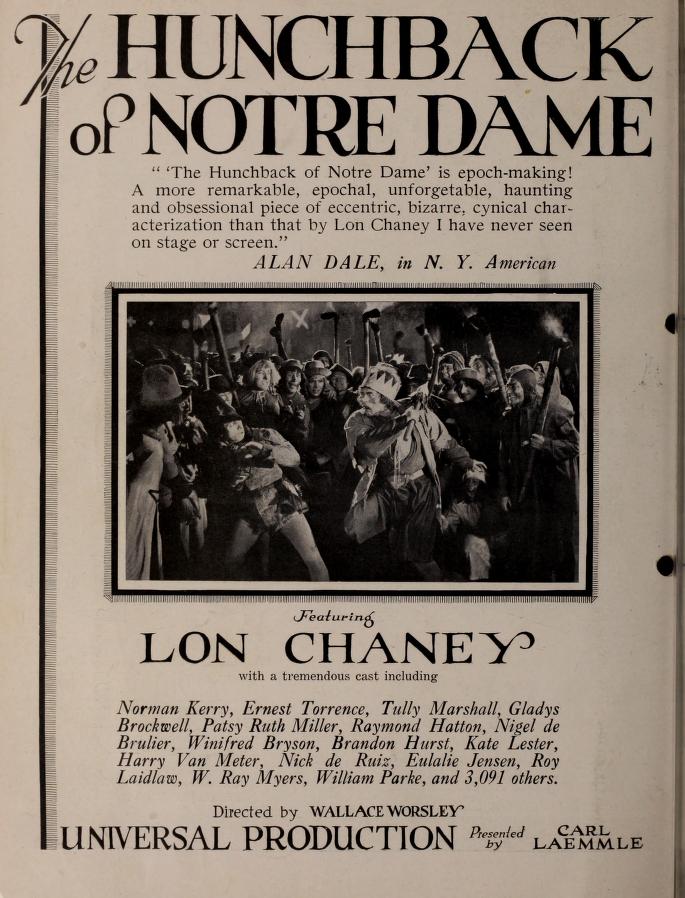
Scott Lord Silent Film: Lon Chaney in The Hunchback of Notre Dame (Worsley, 1923)
Prior to having directed Lon Chaney in the twelve reel silent film “The Hunchback of Notre Dame, Wallace Worsely had been behind the camera for the films “The Penalty” (1920” and “The Ace of Hearts” (1921), both films having feature the Man of a Thousand Faces.
Moving Picture World magazine during 1924 deemed "The Hunchback Of Notre Dame" to be a "spectacle drama". Film Daily included the Cathedral in a photolayout espousing "The Value of Large Sets" during 1926, claiming that Universal had reproduced 20 blocks of medieval France while making the film.
Author Mark A Vieira, in Silent Protypes, a chapter in his volume Hollywood Horror, christens "The Hunchback of Notre Dame" as the "Birth of the Monster", the first film made in the genre. Suprisingly, Vieira follows Lon Chaney to the newly formed merger of Metro-Goldwyn-Mayer and Irving Thalberg. Lon Chaney had starred with John Gilbert and Norma Shearer in the first feature made at M.G.M directed by Victor Sjostrom, formerly known in Sweden as Victor Sjostrom. While author Robert Anderson, in his 1971 volume Faces, Forms, Films, the artistry of Lon Chaney, claims that "in most of the Browning-Chaney films the plot evolved from the characterization", author Mark A.Vieira also gives Chaney credit for creating a new and original character with each new manifestation of make-up; each new character is automatically placed in an entirely different narrative based on Chaney's physical appearance. Vieira follows Chaney back to Universal and The Phantom of the Opera (Rupert Julian, 1925).
Interestingly, Journalist Tom Wilson, in the Allegheny City Society Reporter Dispatch. intimates that silent film director Lois Weber while at Universal had been a "script doctor" on the film "The Hunchback od Notre Dame", the photoplay having been adapted from the novel by Edward Lowe and Perley Poore Sheehan. Lowe, previously a revising editor ar Essanay, had co-written the photoplay to the film adapation of "Under Two Flags" (Tod Browning,1922).

The novel "The Hunchback of Notre Dame by Victor Hugo had previously been filmed during 1906. Director J. Gordon Edwards adapted the novel to the screen during 1917 in a six reel production titled "The Darling of Paris" for Fox Film Corporation starring actress Theda Bara. The film is presumed lost with no existing copies. The synopsis of "The Darling of Paris" given by the periodical Motography during 1917 prooves the film to be a faithful adaptation of the story of Esmerelda and Quasimodo. It reviewed the performance of Theda Bara in the lost film, "The part taken by Theda Bara in'The Darling of Paris' is one of the most interesting characters she has been called upon to interpret since she has been in the silent drama. It is an unusual one, dominating the story beginning to end. There are but few moments when she is not in the picture, which adds to the importance of the production." The periodical Moving Picture World described the film, "To anyone not familiar with the Hugo romance, the Fox screen version presents a well put together photoplay, rich in picturesque incident, strong character drawing, authentic reproduction of an age long past, dramatic situations in abundence, and a climav of thrilling worth."



Lon Chaney
Lon Chaney


 Scott Lord on Silent Film, Scott Lord on Swedish Silent Film, Scott Lord on Danish Silent Film
Subscribe to:
Posts (Atom)