Scott Lord on the Silent Film of Greta Garbo, Mauritz Stiller, Victor Sjostrom as Victor Seastrom, John Brunius, Gustaf Molander - the Golden Age of Swedish Silent Film........Lost Films in Found Magazines: Victor Seastrom directing John Gilbert and Lon Chaney, the printed word offering clues to deteriorated celluloid, extratextual discourse illustrating how novels were adapted to the screen; the photoplay as a literature, a social phenomenon; how it was reviewed, audience reception.
Scott Lord on Silent Film
Gendered spectatorship notwithstanding, in a way, the girl coming down the stairs is symbolic of the lost film itself, the unattainable She, idealized beauty antiquated (albeit it being the beginning of Modernism), with the film detective catching a glimpse of the extratextural discourse of periodicals and publicity stills concerning Lost Films, Found Magazines
Showing posts with label Silent Film: Rudolph Valentino. Show all posts
Showing posts with label Silent Film: Rudolph Valentino. Show all posts
With a photoplay by June Mathis, "Blood and Sand", directed in 1922 by Fred Niblo, showcased Rudolph Valentino with Lila Lee, Nita Naldi and Rose Rosanova. The nine reel film was photographed by cinematographer Alvin Wyckoff; Fred Niblo and photographer Alvin Wyckoff were teamed again the following year for a comedy starring Barbara La Marr and Enid Bennett titled "Strangers in the Night", a film which is presumed lost with no existing surviving copies. Author Peter Cowie, in his volume EIghty Years of Cinema, described "Blood and Sand" as "Stagebound and tearjerking". Swedish Silent Film
While noting that "The Son of the Shiek" (seven reels) was Rudolph Valentino's last film, author William K. Everson opines that it was his best. "It was lush, genuinely erotic and direct in key confrontations- but by 1926 there had been such a change in movie morals that nobody was offended by it, and in any event, its tasteful tongue-in-cheek approach disarmed any serious criticism." It may also be that by now the film is only the material of fanstasy to modern audiences analyzing its diegetic images for keys to female spectatorship and the look. Actress Vilma Banky had appeared with Rudolph Valentino during 1925 in the film "The Eagle" (Clarence Brown). Silent Film
Director Clarence Brown paired Rudolph Valentino with actress Vilma Banky for the film "The Eagle".
During 1925 actress Vilma Banky also costarred with Ronald Colman in the film "Dark Angel", directed by George Fitzmaurice. The film is presumed lost, with no surviving copies that exist.
Silent Film Rudolph Valentino Scott Lord
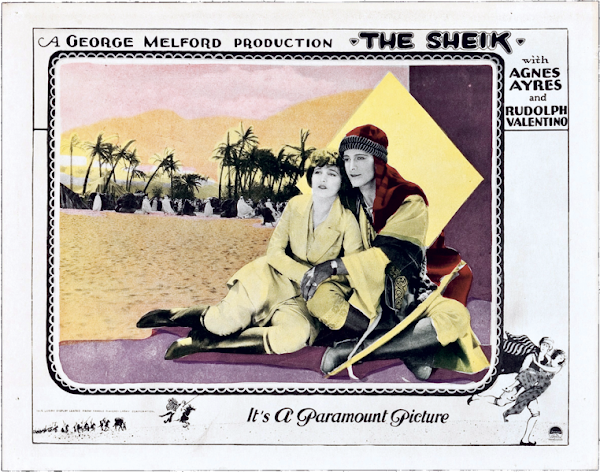
The 1921 Photoplay review of "The Sheik", starring Rudolph Valentino and Agnes Ayers may or may not infact seem cryptic to modern readers, "For the glamor and beauty of the desert, the colorful costumes, the real love story lend themselves to shadows...The whole is more or less a tangible version of 'Pale hands I love, beside the Shalimar, where are you now, who lies beneath thy spell.' But we wonder what the censors will do to to it." silent film Rudolph Valentino
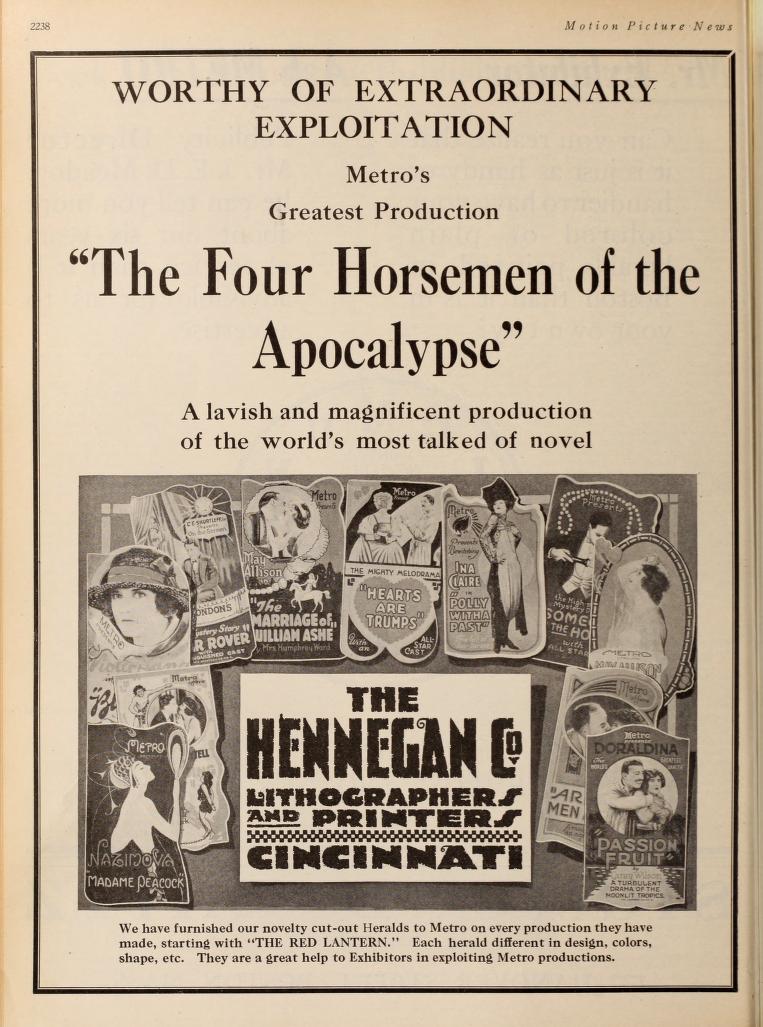
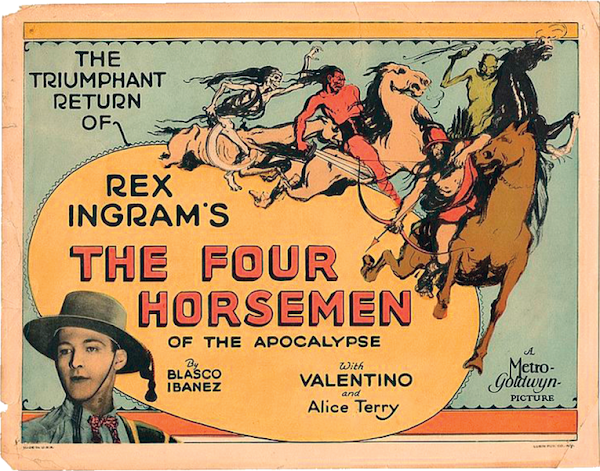
Motion Picture News during 1921 readily boasted that more than seven different types of "exploitations" were used to advertise the film "The Four Horsemen of the Apocalypse" starring Rudolph Valentino. Motion Picture Directing, published in 1922, showed a director Rex Ingram using a white, square canvass reflector to exploit sunlight during the filming of exterior scenes. Author Benjamin B Hampton, in his volume A History of Movies, discusses the rise of screenwriter June Mathis to producer with the film "The Fourhorseman of the Apocalypse" and her effort to "plan the details of camerawork before photography began. This process of planning had been shared by Tucker and a few other directors who called it 'shooting the story on paper before shooting it on film'. 'Shooting on paper'...requires highly trained technical knowledge, clear thinking, a power of visualization and a rounded conception of the picture before camerawork begins. Its advantages are low cost production."
The film was based on the novel writtenby Vincente Ibanez.
Actress Alice Terry starred with Rudolph Valentino in the 1921 film "The Conquering Power" (five-seven reels) directed by Rex Ingram for Metro Pictures Corporation.
Silent Film
The volume “Valentino As I Knew Him” was quickly published in 1926 by S.George Ullman and the A.L.Burt Company. Ullmangives an account of his reminisces of Rudolph Valentino and his conversations with him. “The priest came at my summons and was alone with the dying man for some time...Rudy forced a smile so wan that it belied his brave words and said, ‘I’ll be alright’...’Don’t pull down the blinds! I feel fine. I want the sunlight to greet me.’...These were the last intelligible words he ever spoke.”
The periodical Film Daily during August 1926 quoted actress Mae Murray as having said, "Valentino's greatest quality was a deep sincerity underlying an enormous strength of character." It quoted Lon Chaney as having said, "I don't know when a piece of news so affected me as Valentino's death." John Gilbert was to say, "The death of Valentino is a terrific loss to the screen." Director Clarence Brown said, "Valentino's death is the biggest loss the screen has ever had." Actress Alice Terry gave a heartffelt, "As one who played with Valentino in his first two successes, 'The Four Horsemen' and 'The Conquering Power', his loss to me is a very keen one personally."
Silent Film Rudolph ValentinoRudolph ValentinoRudolph Valentino